
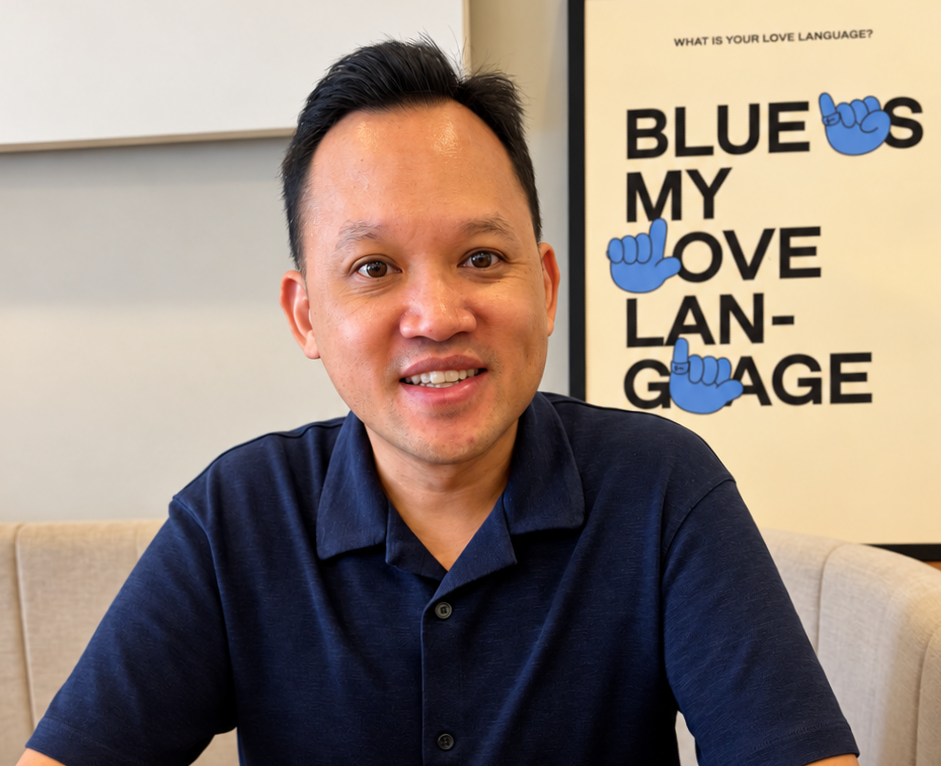
While Rémi once imagined himself holding a senior management position in one of La Défense’s skyscrapers by the age of 50, at 30 he is already looking out over Paris through the windows of his office. He has achieved what he considered his professional dream twenty years ahead of schedule. In 2016, he leaves that world behind and moves to Cambodia with his wife and daughter. A different journey begins. But unlike his professional success, the turning point that will lead him to another form of fulfilment will take several more years.
“I’ve always been surrounded by people.” Rémi Uk grows up in Paris’s 13th arrondissement, at the heart of a community he describes as “Sino-Khmer.” Khmer is spoken, families know one another, and children grow up together. School, taekwondo, weekends: Rémi shares his everyday life with the same group of friends, some of whom remain close to him today.
From his father, a legal professional, Rémi learns the importance of organisation: “When you have an appointment, you should always arrive early. When you have something to do, you should always plan it properly.” His mother, meanwhile, is an entrepreneur. Among other businesses, she runs a jewellery shop where Rémi works on weekends. But when he speaks about her today, what stands out most is her energy. “She’s really the head of the family. She’s always going full speed. She’s tireless.” He watches her juggle “10,000 things at once,” without complaining.
The community around him, his father’s discipline, his mother’s energy: Rémi grows up with these three guiding influences. Years later, traces of all three will emerge in the way he works. And it does not take long for him to put them to the test professionally.
Business school, a master’s degree in finance, then PricewaterhouseCoopers (PwC): Rémi smiles as he describes this as a very Asian career path, the kind many parents of his generation envisioned for their children. His siblings follow similar paths.
Behind the scenes of major corporations
At PwC, Rémi discovers a level of professional rigour that leaves a lasting impression. His first meeting report takes him four days to write and runs to twelve pages. The meeting itself? Thirty minutes. His mentor reviews everything, from the wording and presentation to the smallest details. “He even corrected my double spaces.”
Rémi spends five years at PwC, gaining an inside view of some of France’s largest companies, including L’Oréal, LVMH, Christian Dior and Thales. He discovers corporate worlds with deeply distinctive cultures. At Dior, female design directors arrive with their little dogs, “just like in the movies.” At L’Oréal, even the surroundings reflect the company’s identity. “The lift is beautiful. The meeting rooms are beautiful.”
After years of working alongside major corporations, Rémi eventually joins their management ranks himself. He leaves PwC for Thales, where he joins the group’s general management team. In his twenties, Rémi had imagined himself at 50, holding a senior management position in one of La Défense’s towers, looking out over Paris from above. At 30, the scene he once pictured is already before him. “I thought to myself: well, I have nothing left to prove professionally.”
And then there is Cambodia
As a teenager, Rémi admits he was “a little ashamed” of his origins. It was a difference he constantly had to explain in a France where many of the people he met knew almost nothing about Cambodia. But his first trip to the country gradually begins to change his perspective.
After that visit, he starts learning Khmer and meets other young people who, like him, are growing up between two cultures. His father eventually makes the journey in the opposite direction. Trained in law, he returns to Cambodia in the 1990s and contributes to rebuilding the country’s judicial system as a senior civil servant.
An idea gradually takes root in Rémi’s mind too. “I always told myself that one day I would come and help Cambodia develop.” It is not until 2016 that this ambition becomes reality. Rémi finally leaves France and settles in Phnom Penh with his wife, Julie, and their daughter. What was initially meant to be an experience lasting a few years gradually becomes a life.
Learning from life on the ground
“People call me the embassy doctor’s husband. They don’t know I have a job,” he laughs when asked how people know him in Phnom Penh. Professionally, however, he does not remain a spectator of his new Cambodian life for long. One of his first ventures is Procare, the medical practice he and Julie establish together, which she later goes on to manage.
Their French professional experience quickly comes up against a different reality. The construction work alone requires far closer supervision than they had anticipated. Then comes the challenge of navigating the healthcare system.
Rémi discovers habits that differ from those he knew in France. For certain conditions considered minor, some patients first turn to pharmacies and only consult a doctor later. Attitudes towards medication also catch his attention. Within his own Cambodian family, Rémi has long noticed a particular reliance on Doliprane, which he tentatively attributes to an old advertising campaign whose influence may have endured across generations.
At Procare, however, it is the use of antibiotics that strikes him most. “The systematic use of antibiotics.” For him, the challenge is now also one of education and prevention.
When reality sets the rules
Accustomed to structured processes, Rémi initially approaches his projects in the way he knows best: writing, organising and formalising. He produces procedures that are sometimes long and highly detailed. On paper, everything is there. In practice, things are very different. “I tried to replicate what I was doing in Paris. And it doesn’t work.”
Eventually, he turns the problem around.“You’re the one who has to adapt.” Depending on the team, levels of English proficiency, working habits and attitudes towards procedures vary. So he turns to visual communication. In one company, for example, tools are regularly misplaced or damaged. The team draws the outline of each tool directly onto the wall, marking exactly where it should be returned.
This time, it works. For someone whose mentor once corrected even his double spaces, the lesson is also about maintaining high standards while accepting that the methods may need to change.
Eight years before the turning Point
Yet adapting to Cambodia does not necessarily mean finding his place there. The years go by. Rémi works, his family settles in, and routines take shape. He describes a comfortable life: the condominium, the swimming pool, trips around the region.
An enjoyable life, but one that does not fully answer his long-standing desire to contribute to the country. For a long time, Rémi also focuses on what is not working. He criticises, compares and points out what could be done differently.
Until one day, he turns that same criticism on himself. “I was complaining more than I was creating.” That reflection eventually leads him to OBOR, where he now works in impact investing.There, Rémi supports businesses whose activities address social and environmental challenges, including access to water for rural communities.
And through them, he rediscovers something that has been part of his life for as long as he can remember: the power of working together. Only this time, it is about helping businesses grow.
An opportunity to seize
Rémi is well aware of the limitations of the Cambodian market, the challenges businesses face and the gaps that remain between Cambodia and more developed economies. But in certain sectors, he refuses to see the country’s future solely in terms of catching up.
Technology is one of them.“I actually think there isn’t even a gap. On the contrary, we’re all starting from the same line.” When a technology is new, he explains, the playing field can change. Cambodian businesses do not necessarily have decades of progress to make up for. They can adopt new tools directly and build from there.
And Rémi returns to one idea several times during our interview: “Talent isn’t specific to a country. It’s specific to an individual.” His optimism goes as far as imagining the emergence of Cambodia’s first unicorn one day. He also believes the broader environment is evolving.
After nearly a decade in the country, Rémi says he has noticed a more straightforward relationship with institutions and greater openness towards entrepreneurs than when he first arrived. In his view, these changes are making it easier to build businesses locally.
Passing it on
Today, Rémi’s desire to contribute takes several forms. Through his work at OBOR, his involvement in programmes such as the Techo Startup Center, and his public speaking engagements, he continues to share his experience and contribute to what is being built in Cambodia.
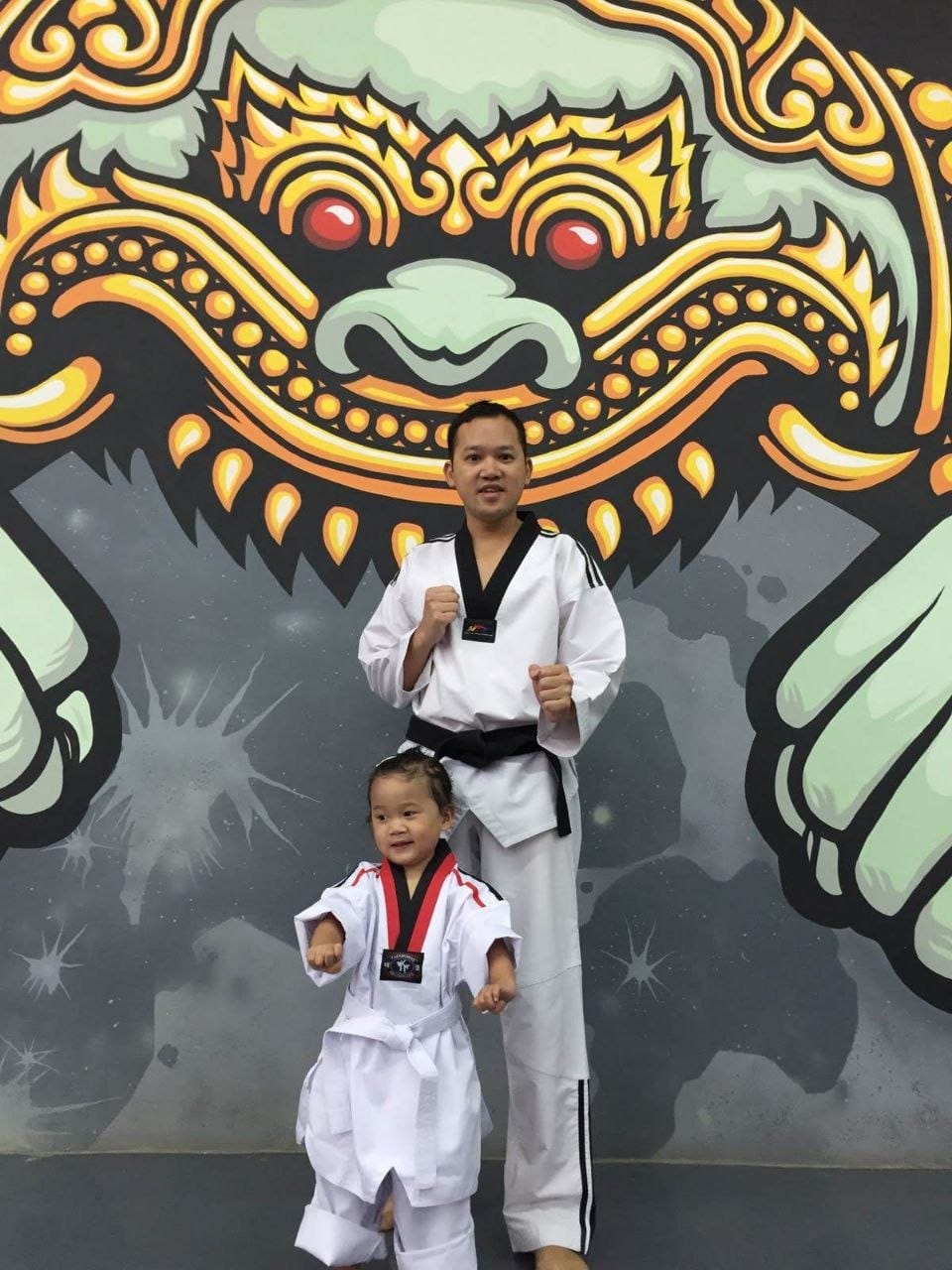
Several times a year, he also visits orphanages with a group of friends, choosing to bring his children along. Passing on what he has learned is also something that matters within his own family.
Before our interview, Rémi had explained that he had already mapped out the next stage of his life quite precisely: he would remain in Cambodia for a few more years, until his daughter completed secondary school, then follow her if she decided to pursue her studies in France.
Between that conversation and our meeting, however, something had changed. “I realise I won’t be able to control my children’s lives.” His own life is no longer entirely planned out either. But one thing remains certain. “As long as I’m here, I’m going to do great things. That’s the only thing that’s clear in my mind for now.”
He achieved his professional ambitions twenty years ahead of schedule. As for finding fulfilment, that is a journey he is still living.
This portrait of Rémi Uk marks the beginning of a new Riel Media series dedicated to Franco-Khmer individuals. Through their personal stories, we will explore their journeys, their connections to Cambodia, and the different ways they navigate life between two cultures.
Comments