
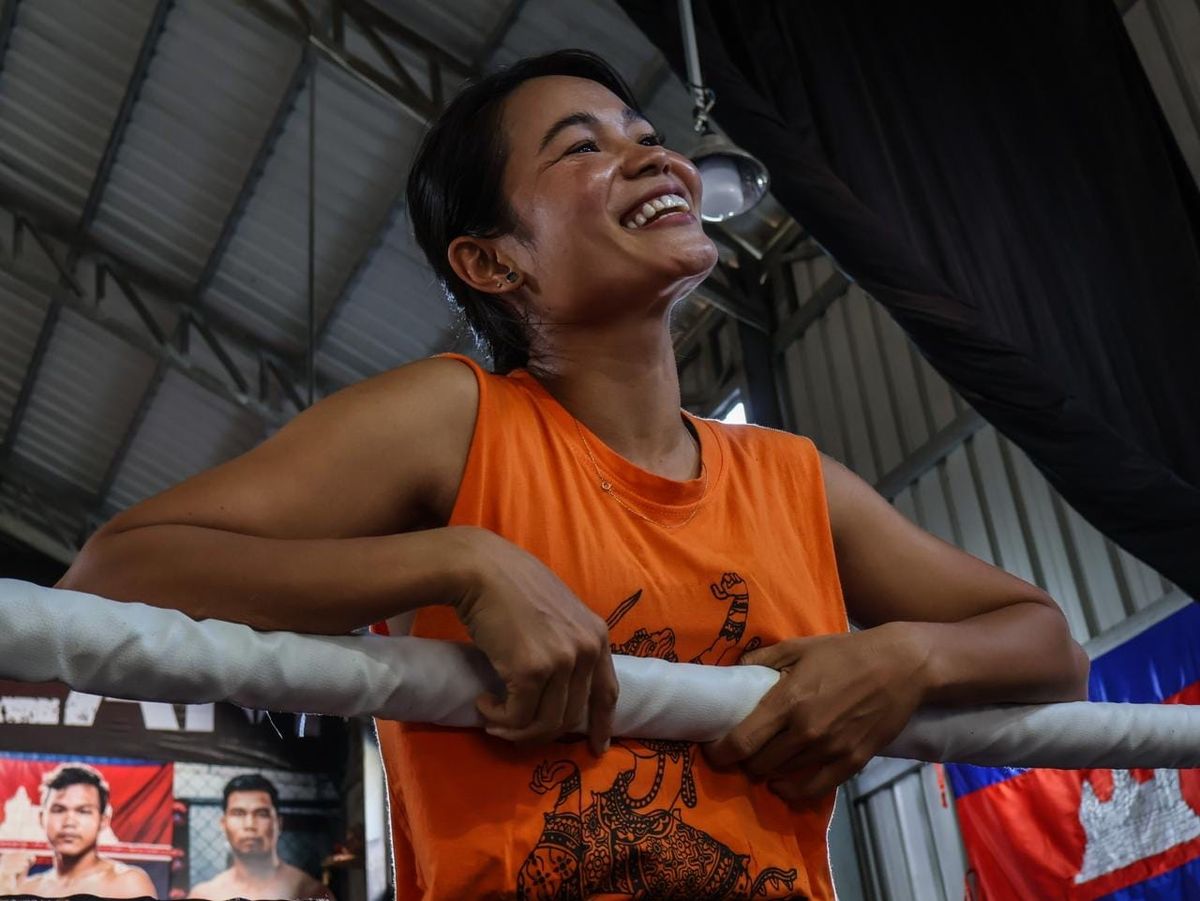
After experiencing an assault as a teenager, Tharoth finds in martial arts a way to rebuild herself. But to become a fighter, she must also confront her family's expectations and the prejudices of a society where women have not always had a place in the ring.
Some people move us deeply. They touch us through their words, their emotions and their life stories. Tharoth is one of those people who leave us changed after a conversation. So many hardships endured, obstacles overcome and strength found when there seemed to be nothing left.
Standing alone against everyone, she fought to break free from family and societal expectations and become part of something greater. Something transformative: a new role model for a generation increasingly willing to question family constraints and the place of women in Cambodian society.
This is a story of resilience and determination, told through both her successes and her vulnerabilities. Tharoth managed to turn an assault into a driving force, emerging stronger and more supported than ever.
We had the privilege of meeting a woman whose radiant energy immediately surrounds us with warmth, kindness and determination. Her joy and desire to live beyond the rules imposed upon her are contagious. In a way, you cannot help but feel proud of her journey from the moment she begins telling her story.
Tharoth was born and raised in Cambodia. Her early life began in refugee camps in Thailand. Growing up in a financially struggling, deeply conservative and emotionally reserved family, she faced constant pressure to conform to the expectations placed on a young Khmer girl: not to laugh too loudly, not to walk too quickly, to be helpful and to remain politely in the background. In short, to be useful but silent.
Nothing in her childhood suggested the career she would eventually pursue. She broke every rule she had been taught since birth, initially driven by the desire to protect herself from a violent environment. Her words say it all: "Martial arts saved my life."
At 18, the only girl in a Kun Khmer gym
Her journey began, tragically, with something many women experience: an assault during her teenage years that left her paralysed with fear. The shock she experienced forced her to confront the fact that, in such a situation, she had been unable to protect herself physically.
What followed was a growing feminist conviction, fuelled by a profound sense of helplessness and injustice towards women experiencing domestic violence, something Tharoth had witnessed herself. She quickly felt the need to help them.
But how? By becoming strong. Not to attack others, but to know how to defend herself if necessary. To have the confidence that, deep down, we are capable of protecting ourselves.
At 18, she walked into the nearest Kun Khmer gym, where she met one of the most important people in her life: her grandmaster, who would guide her for years and eventually become like a second father.
At the time, she was the only woman to walk through the gym's doors. Her grandmaster welcomed her with tremendous kindness, delighted to have a female student among his fighters. He quickly recognised her potential and decided to train her free of charge, knowing that she came from a disadvantaged background.
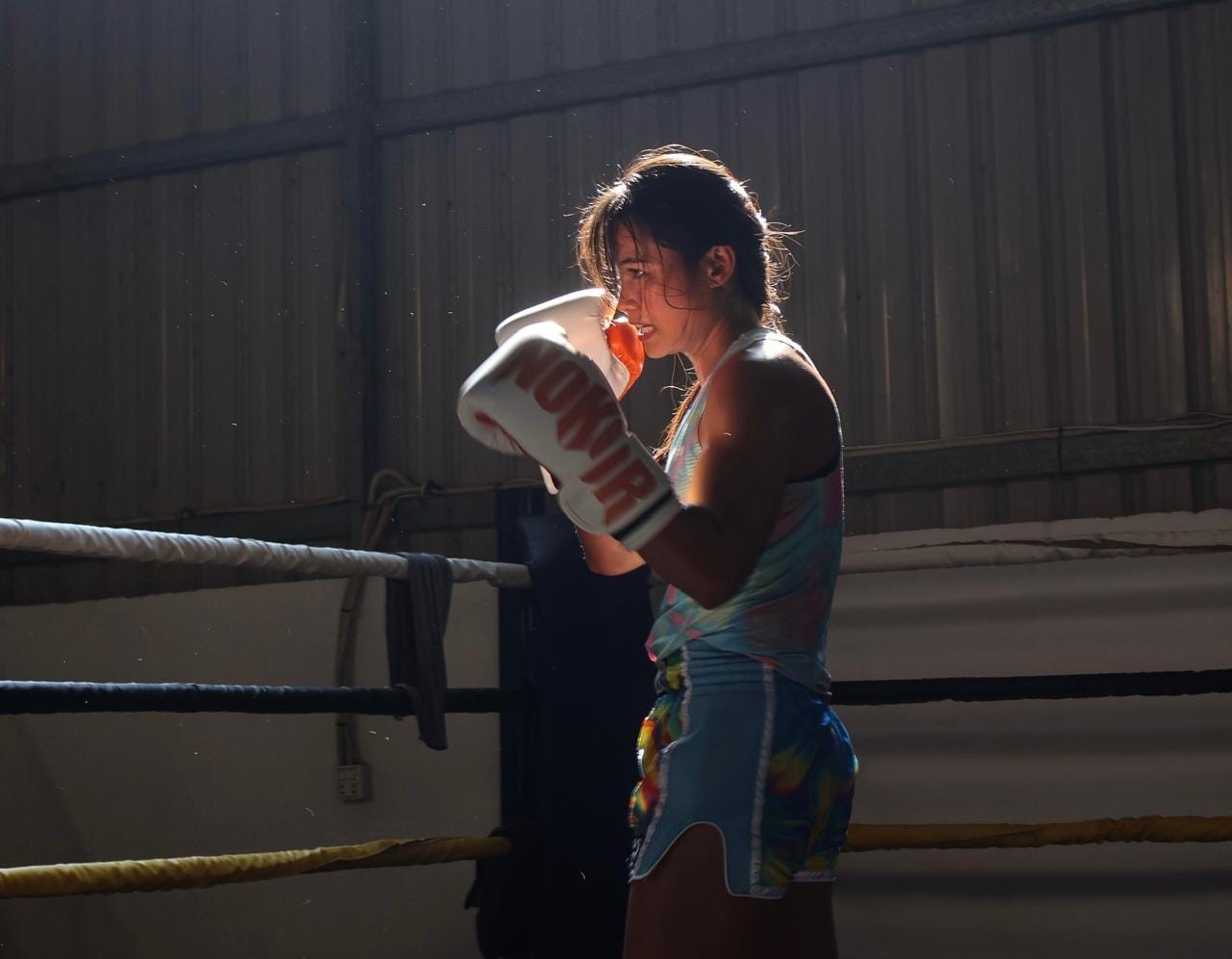
Over the years, he became much more than a teacher. He was an emotional pillar, lifting her up whenever she felt overwhelmed by the desire to give up, encouraging her to take part in her first fights and, above all, urging her to embody something new: becoming a source of inspiration for young girls.
A first knockout, followed by rejection from those around her
During her first fight, she surprised everyone by knocking out an opponent who was far more experienced than she was, despite judges having discouraged her from competing out of concern for her safety.
For Tharoth, the moment was exhilarating. It was also a turning point, as her family discovered that she was practising Kun Khmer. Their reaction was harsh. Furious, her mother insisted that she return home. Criticism poured in from the village: "A young Khmer girl is not supposed to fight like that."
On social media, the backlash intensified: "Women never get very far. She should stop." As the criticism continued to build over the following months, she decided to give up martial arts. She could no longer bear the weight of defying the expectations that had been imposed on her since birth.
Her grandmaster responded coldly: "You are no longer my student." Heartbroken, she spent the following year alone, away from the ring. For Tharoth, it is important to speak about this period of emptiness, doubt and surrender, because her future was never guaranteed. She fought fiercely to build it, and even she was not always convinced that she could succeed.
One year after giving up, a return to martial arts
A year later, what felt like a sign of destiny arrived: her grandmaster called her and offered her a new opportunity, a Bokator competition. She immediately accepted, delighted by the invitation.Without any particular expectations, the Cambodian team travelled to Korea and delivered a modest performance that nevertheless impressed the judges.
Another surprise followed: Cambodia secured second place, a result the team had hardly dared to dream of. The experience was documented in the film Surviving Bokator.
From that moment, everything began moving quickly in Tharoth's life. Major film productions approached her, and she went on to work in Hollywood while keeping the nickname she had carried since her teenage years and fighting career: "Little Frog", a reference to her childhood on farms, where she regularly caught frogs to find food.
Her efforts gradually began to pay off. Tharoth gained recognition, and attitudes towards her started to change. Yet resilience remained a daily necessity. Despite achieving a certain level of fame in Cambodia, she still had to assert herself on film sets. She continued training tirelessly and approaching everything "with heart". Never giving up the fight, doing what feels right and carving out her own path: these were the principles she pursued with relentless determination.
From fighter to role model for young Cambodian women
Refusing to settle for what life offers and choosing instead to build something more. Perhaps that is how someone becomes a role model. Her grandmaster encouraged her to share her story more widely, to speak about her experiences and become more than a fighter: an inspiring figure.
Beyond family and cultural pressures, Tharoth had to create that place for herself. Years later, she finally earned her family's recognition, particularly that of her mother, who, in Tharoth's own words, became her biggest fan. Today, it is her turn to give back to the elders who supported her. She takes great care of her parents and has moved back to live with them.
She devotes much of her time to them because she feels a responsibility to look after them. They provided her with food, knowledge and everything she needed to grow up. She wants to repay that care with warmth and gratitude.Doing good without expecting anything in return: this is what has guided Tharoth throughout her life and continues to guide her today.
As a fighter who has achieved recognition while combining strength and femininity in the ring, she represents something new in Cambodia. She has opened up new possibilities for young women, who are increasingly stepping into martial arts gyms to learn how to fight. She welcomes this shift in attitudes with great enthusiasm.
Today, she trains police officers in martial arts, passing on what she has learned with gratitude. She also works with members of the royal family, a sign of how profoundly things have changed in such a short time. With energy, courage and love, great things can be achieved, and Tharoth is living proof of that.
After such a long journey, she is now ready to share her story and feels proud of herself because, despite the many challenges she has faced, she has persevered against all odds.
And this is the message she wants to pass on today, particularly to younger generations: keep challenging family stereotypes, even when the process is long and exhausting. Keep trying.
Cambodian Stories, founded by Pauline Reina and Léa Sannier, is an initiative dedicated to sharing the human stories that shape Cambodia. Through personal encounters and testimonies, it seeks to give a voice to those whose journeys, experiences and commitments offer a different perspective on the country. By placing people at the heart of its storytelling, Cambodian Stories invites readers to look beyond preconceived ideas and discover the diversity of individual experiences that make up Cambodian society.
Comments